The door between your living room and your alfresco gets used more than almost any other part of the house. Sliding, stacking and bifold doors all do the job, but each opens in a different way and suits a different space.
| Sliding | Stacking | Bifold | |
|---|---|---|---|
| How much opens | About half | Up to two-thirds | Almost the full width |
| Space needed to open | None, panels stay in the track | None, panels stack behind each other | Space for panels to fold out |
| Best for | Most openings, tight spaces | Wide openings, newer homes | Entertaining, pool and deck areas |
| Screens | Easy to add | Easy to add | Ask about options |
Sliding doors
The all-rounder. One panel slides past a fixed panel on heavy-duty rollers, so nothing swings into the room or onto the deck. Sliding doors suit almost any opening and are the simplest to screen and secure.
Stacking doors
A stacking door is like a sliding door with more panels. Two or more panels slide and stack together, so you can open up to two-thirds of a wide opening. Stacking doors are a popular upgrade in newer estates where the builder fitted a basic two-panel slider to the alfresco.
Bifold doors
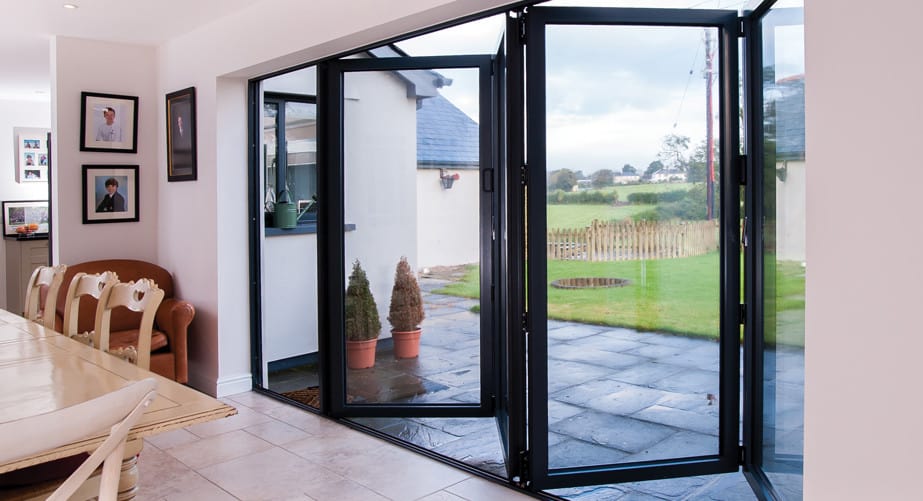
Bifold doors fold back like a concertina, opening almost the entire wall. They make the living room and outdoor area feel like one space, which is perfect for entertaining. You do need room for the folded panels to sit.
Questions to help you decide
- How wide is the opening? Wider openings suit stacking or bifold doors.
- Do you want the whole wall open, or is two-thirds enough?
- Is there furniture or a barbecue near the door that panels would hit?
- How important is a fly screen or security screen?
- Are you replacing an existing door? The structure above the opening matters.
Replacing a slider with a stacking or bifold door is often possible, but the opening and the structure above it need checking. We look at this when we measure.
All three are made to measure in our Glendenning factory. Book a free measure or visit us to see them working.