If you have a wide opening to a deck, patio or alfresco and a standard two-panel slider that only ever opens halfway, a stacking door is often the upgrade you are looking for. Also called stacker doors, aluminium stacking doors are a popular choice for Sydney homes with an outdoor living area. This guide explains how they work, how they compare with sliding and bifold doors, and what to decide about sills, glass, screens and colour before you book a measure.
What is a stacking door?
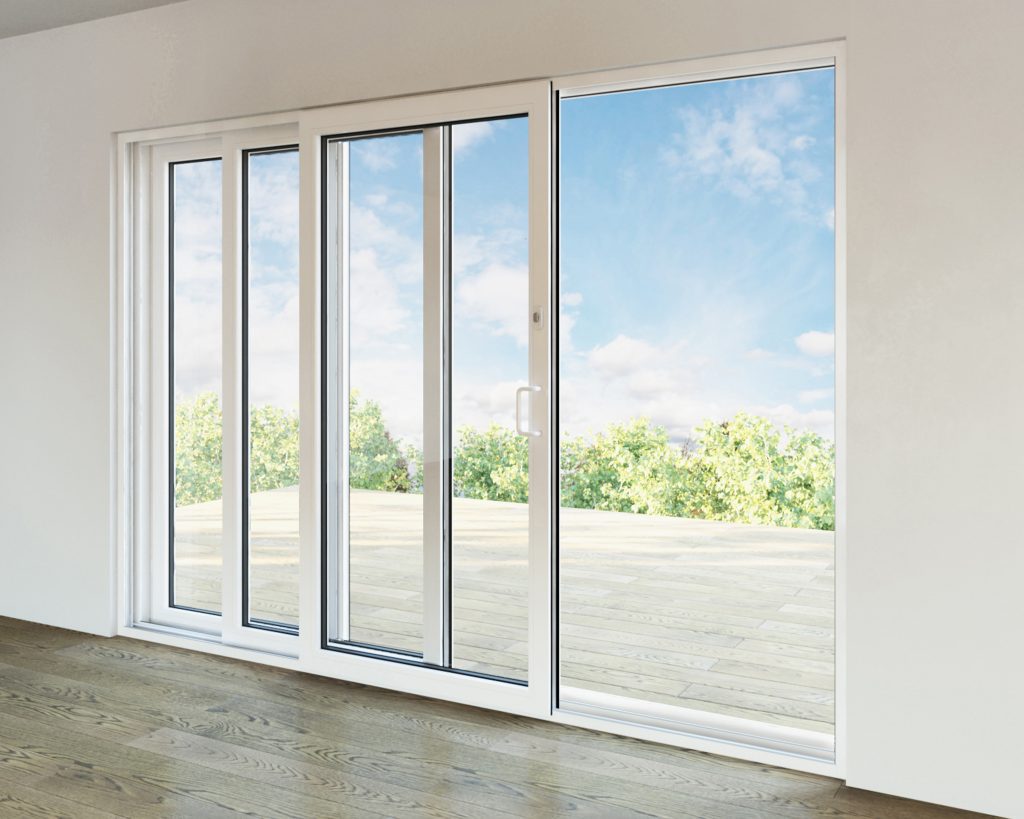
A stacking door works like a sliding door with extra panels. Instead of one panel sliding past a fixed one, two or more panels run in their own tracks and slide behind each other, stacking neatly together at one side. With a three-panel stacker, two panels slide across behind the third, so up to two-thirds of the opening is clear.
Because every panel stays in its track, nothing swings into the room or out onto the deck. That makes stacking doors a good fit where furniture, a barbecue or outdoor seating sits close to the doorway, and where a hinged or folding door would get in the way.
Stacking, sliding or bifold: which suits your opening?
All three styles connect the inside of your home to the backyard, but they open in different ways. We compare them in more detail in our guide to sliding, stacking or bifold doors, but here is the short version.
- Sliding doors usually have two panels, with one sliding past the other, so about half the opening is clear. Sliding doors suit standard doorways and tight spaces.
- Stacking doors use three or more panels and open up to two-thirds of the width. They suit wider openings where you want more of a connection to the outdoors without anything folding out.
- Bifold doors fold back in a concertina so almost the full width opens. Aluminium bifold doors give the widest opening, but the folded panels sit at the side and need some clear space when open.
If you want the whole wall gone on summer weekends, a bifold makes sense. If you want a wide opening you will slide open and closed every day, with panels that stay in their tracks, a stacker is hard to beat.
Where stacking doors work well in Sydney homes
Stacking doors are a popular upgrade in newer estates across Western Sydney and the Hills, where builders often fitted a standard two-panel slider to the alfresco. Replacing that slider with a stacker can open up the back of the house without changing the size of the opening, as long as the opening is wide enough for the extra panels.
They also work well for:
- Family rooms and kitchens that open onto a covered alfresco or deck
- Wide openings to a pool area, where a door that stays in its tracks keeps the walkway clear
- Homes where a bifold would fold out onto a narrow patio or into a path
Measure the full width of your opening, then think about where the stacked panels will sit when open. Keep that side clear of downpipes, power points and tall furniture so the door can open fully.
Sill options and the step outside
The sill is the bottom track the panels run in, and it makes a big difference to how the doorway feels to walk through. Our stacking doors come with low-profile 70mm or 45mm sill options, and the hollow sill has a built-in baffle to help with water, air and noise.
Where the door opens onto a timber or composite deck, a stacker can often be flush fitted with drainage under the decking, so the floor inside and the deck outside feel more like one level. We check floor heights, slab and deck when we measure.
Panel sizes, rollers and frame
Stacking doors are built for large, heavy glass panels. The frame is 170mm wide, panels can be up to 2700mm high and up to 1500mm wide each, and each panel runs on heavy-duty double rollers designed for heavy, double-glazed panels. We confirm the right size, glass and configuration for your opening when we measure.
Glass choices
Stacking doors can be single glazed up to 6.38mm or double glazed up to 22mm, with laminated, toughened, frosted or Low-E glass.
On a west-facing alfresco, or a large glass wall that catches a lot of sun, glazing choices affect how warm the room gets in summer and how much heat it loses in winter. The Australian Government’s Your Home guide to glazing explains how double glazing and Low-E glass change a window’s energy performance.
Fly screens and security screens for stacking doors
Screens let you leave the glass open on a summer evening. You can add a matching fly screen or security screen to a stacking door, in stainless steel or fibreglass mesh.
Colour and finish
Every frame is powder coated, and you can choose a colour from the Dulux powder-coat range to match your windows, gutters or the rest of the house. Options include Monument, Surfmist, Woodland Grey and Black. On-screen colours are only a guide, so it is worth seeing real powder-coat samples before you decide. You are welcome to visit our factory at 1/173 Power St, Glendenning, Monday to Friday 8am to 5pm and Saturday 8am to 2pm, to see the doors and samples in person.
What to check before you book a measure
- Width of the opening. A stacker needs enough width for three or more panels to be practical.
- Which side the panels stack to. Decide which side you want clear when the doors are open.
- Floor and deck levels. Note whether you would like a low or flush sill onto the deck.
- Sun and orientation. This helps decide between single glazing, double glazing and Low-E glass.
- Screens. Decide whether you want fly screens, security screens or both.
We make every stacking door in our own Glendenning factory and install it with our own team. We have been making doors, windows and screens for Sydney homes since 2007, and we supply and install every job rather than selling supply only.
Stacking doors FAQ
What is the difference between a stacking door and a bifold door?
A stacking door opens up to two-thirds of the opening and keeps the panels in their tracks. A bifold opens almost the full width, but the panels fold out to the side and need clear space when open.
Can I replace my sliding door with a stacking door?
Often, yes, if the opening is wide enough for the extra panels. We check the opening and the structure around it when we measure.
Are stacker doors the same as stacking doors?
Yes. “Stacker doors” and “stacking doors” are two names for the same style: sliding panels that stack behind each other at one side of the opening.
Can stacking doors have fly screens?
Yes. We make matching fly screens and security screens for stacking doors, in fibreglass or stainless steel mesh.
Can stacking doors be double glazed?
Yes. They can be double glazed up to 22mm, or single glazed up to 6.38mm, with laminated, toughened, frosted or Low-E glass.
Get stacking doors made for your Sydney home
See the suburbs we cover on our service areas page. Request a measure and quote or call us on 1800 793 946.